

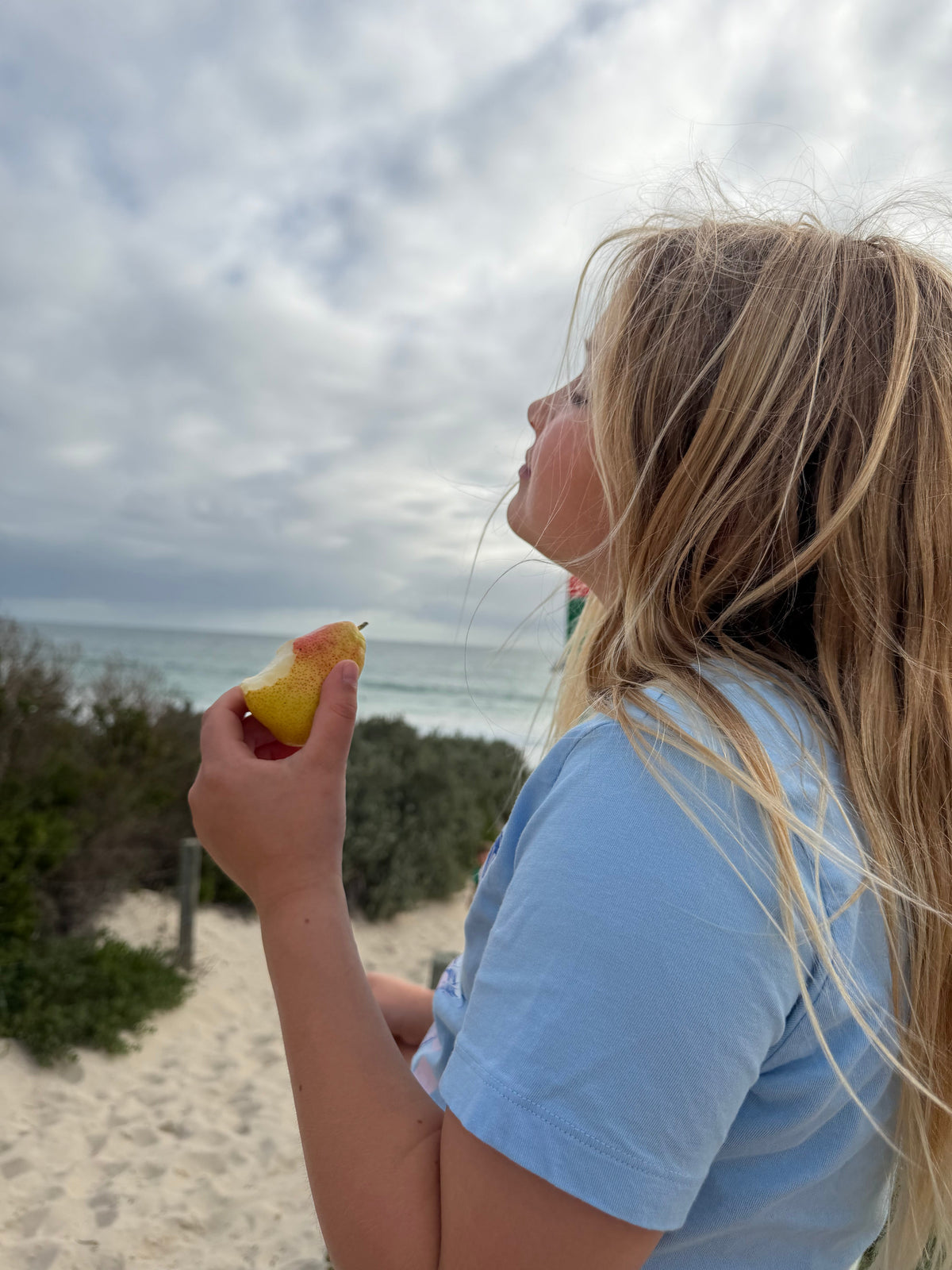
Because young skin is thinner, more delicate, and, with its microbiome still finding its balance, it reacts more to nutritional shifts than adult skin does. Here is how we can help our kids nourish their skin from the inside out so they can unleash their shine every single day!
1. Strengthening the Barrier with Healthy Fats
Young skin has a less developed outer barrier (stratum corneum), making it more susceptible to moisture loss, harsh weather, and environmental irritation. You can help "thicken" and strengthen this natural moisture shield by serving foods rich in Omega-3 fatty acids.
-
The Power Foods: Salmon, chia seeds, walnuts, flaxseeds and avocados.
-
The Skin Win: Essential fatty acids act as a natural internal moisturiser. They nourish cell membranes and help calm dry, itchy, or flaky patches frequently seen during the "in-between" tween years.
2. The Gut-Skin Connection: A Delicate Ecosystem
A child's skin microbiome is unique, and this delicate ecosystem is closely connected to their digestive health. Research shows that a healthy, balanced gut microbiome directly correlates with lower systemic inflammation and calmer skin.
-
The Power Foods: Probiotic-rich Greek yogurt, kefir, prebiotic fibre-rich fruits such as berries, and oats.
-
The Skin Win: Supporting gut health helps reduce the frequency of inflammatory skin flare-ups. This is especially vital for children navigating sensitive skin, eczema, or psoriasis triggers - the very struggles that inspired Ana’s journey to co-found Frasique.
3. Avoiding the "Trend" Traps: Sugar, Inflammation & Early Breakouts
Just as we advocate against harsh "adult" actives and ingredients like Retinoids or exfoliants for young skin, we also suggest being mindful of highly processed ingredients in diets. High-sugar snacks and sugary drinks trigger rapid insulin spikes, which lead to oil gland overactivity, a common cause for early breakouts in tweens.
-
The Smart Swap: Trade sugary drinks and artificial treats for fresh fruit, infused water or soothing herbal teas.
-
The Skin Win: Stable blood sugar levels lead to regulated sebum production, resulting in calmer, clearer skin and fewer breakouts.
4. Essential Vitamins for Skin Resilience
To help kids face the world with confidence, their skin needs the proper nutrients to repair itself from everyday playground scrapes, environmental stressors, and sun exposure. Feed them foods rich in:
-
Vitamin C (Strawberries, Kiwis & Citrus): Vitamin C plays a vital role in collagen synthesis, acting as a building block for skin repair and elasticity, while providing strong antioxidant defence.
-
Vitamin A (Carrots, Sweet Potatoes & Spinach): Vitamin A supports the natural cell turnover that keeps young skin vibrant and smooth.
A Frasique Note: Fueling Confidence from the Inside Out
Serving nutritious food doesn't need to be another stressful task on a parenting to-do list- think of it as a daily act of care.
When we offer our kids colourful, whole foods, we teach them to honour and respect their growing bodies, and pairing good nutrition at the dinner table with a simple, 5-minute skincare routine at the sink gives them the tools to care for themselves inside and out.
Skincare and nutrition share the same goal: teaching our children that their bodies are worth caring for. We aren't here to "fix" skin - we’re here to help you raise confident, happy kids!
Unleash your shine!
Ready to Complete Their Routine?
Give their skin the safe, age-appropriate care it deserves from the outside, too! Explore the Collection
References & Further Reading
- Molla A. Dietary Patterns and their Impact on Atopic Dermatitis: A Comprehensive Review. Open Dermatol J, 2024; 18: e18743722306189. http://dx.doi.org/10.2174/0118743722306189240520075943
- Balić, A., Vlašić, D., Žužul, K., Marinović, B., & Bukvić Mokos, Z. (2020). Omega-3 Versus Omega-6 Polyunsaturated Fatty Acids in the Prevention and Treatment of Inflammatory Skin Diseases. International journal of molecular sciences, 21(3), 741. https://doi.org/10.3390/ijms2103074Pullar, J. M., Carr, A. C., & Vissers, M. C. M. (2017).
- Pullar, J. M., Carr, A. C., & Vissers, M. C. M. (2017). The Roles of Vitamin C in Skin Health. Nutrients, 9(8), 866. https://doi.org/10.3390/nu9080866
